

A flat tape extrusion line may return to production after a planned shutdown, a tooling exchange, a supplier repair, or an extended period in storage. Each reason produces a different set of questions. A line that stopped for a planned pause may need its established reference records brought back into use. A line that received an exchanged die may need proof that the assembly matches the approved configuration. A die returning from repair may require a clear statement of the work performed and the condition in which it was returned. The most useful restart plan starts by naming the event, the specific tooling involved, and the decision the team expects to make at the end.
Procurement can turn that decision into a short statement before a quotation is requested. For example, the plant may want to establish whether a returned assembly can be released for a named product family on one identified line, subject to its normal quality review. That statement is narrower and more useful than asking the supplier to confirm that the die is ready for all production. It gives engineering a defined configuration to check, operations a defined trial scope, and quality a defined group of samples to review. It also gives purchasing a way to distinguish documents and services included in the quotation from the work the plant will handle.
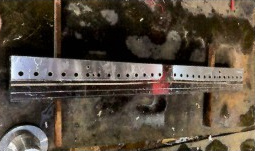
Kangjia catalog photo showing a flat tape die along its length.
Start the working record with an asset identifier, the line identifier, and the drawing or approved reference that applies to the assembly. Add the supplier reference and order number where available. If the die has detachable items that can move between assemblies, agree which ones require individual identification and which can be listed as part of an assembly. Keep the same reference on the receiving record, the photographs, the correspondence, and the trial report. A photograph named with a date alone can be difficult to place after a busy maintenance period, particularly when a plant has several dies that look similar.
Treat physical identity and document status as separate checks. A nameplate or asset marking can identify the assembly without confirming that the latest drawing applies to it. A drawing can describe the approved configuration without proving that the part on the floor is the one it describes. Record where each fact came from. When a mark is illegible, put the part on the discrepancy list and ask for another traceable reference. Do not assign a drawing to it on the basis of a visual resemblance. This distinction matters when an older assembly has been modified and later returned to stores under a familiar name.
Before placing the order, ask what the supplier will return with the tooling. The package can include the agreed scope of work, the assembly identity, a list of supplied or replaced items, any exceptions to the quoted scope, and the inspection documents specified by the buyer. A return from outside repair also benefits from a written distinction between reported condition, completed work, and work still recommended. These items serve different purposes. A report of a problem does not prove it was corrected, and a recommended action does not mean the purchase order included it.
Use the delivery milestones to attach each document to a real decision. Ask which information is required before dispatch, which arrives with the assembly, and which can only be produced after a trial at the plant. A missing packing document may be an administrative issue that can be corrected promptly. A missing configuration record can prevent the technical team from determining what was delivered. Give each open item a named owner and a target point in the schedule. This makes the decision visible before a shipment, when both parties still have time to resolve differences without relying on an urgent message at the start of a shift.
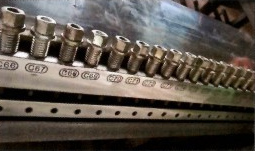
A catalog close-up showing fasteners on a flat tape die assembly.
The receiving team can confirm the package identifier, the number of packages, the items that can be identified without dismantling, and the condition visible at receipt. Photographs can show the packaging, labels, and any visible issue before the assembly is moved to the next area. Record differences between the packing list and the delivered contents as observations. If a component cannot be inspected until the plant opens its protective packaging under an approved process, write that down explicitly and give the next check to the responsible team. A receipt signature should carry only the meaning assigned to it in the order and site procedure.
Installation readiness belongs to the plant personnel responsible for the line. Their review may need the correct approved drawing, maintenance instructions, required supporting parts, and the formal clearance for the planned work. The buyer can verify that the requested evidence is available and that its owner has accepted it. Decisions about setup, handling, operating settings, and safe work belong with the equipment documentation and authorized site personnel. Keeping these responsibilities separate helps prevent a purchasing email about delivery from being interpreted as a technical instruction or an authorization to put equipment into service.
Make a change record for the period between the last accepted production run and the planned restart. The record can include the tooling event, a change in incoming material, a different line assignment, a revised downstream requirement, or a change in the instrument or method used to assess samples. List confirmed changes separately from changes suspected by the team. Even when the only planned work concerned the die, other departments may have updated a specification or reassigned a material lot while the line was out of service. These events become much easier to investigate when they are recorded before the trial.
For every relevant change, write down the old reference, the new reference, the person or department that confirmed it, and the part of the restart review it affects. A quality team might need the revision of the finished tape specification, while the warehouse might need to verify that its retained reference sample was labeled correctly. If the earlier condition cannot be established, record the gap rather than filling it with a presumed setting. An incomplete historical record can still be used if the team agrees which comparisons remain valid and which questions must be answered with new observations.
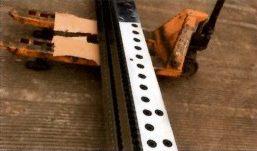
An angled catalog view of a die component showing a row of openings.
An accepted production run can provide a practical reference if the evidence represents the product and configuration now being reviewed. Locate the relevant product specification, the accepted run record, any retained physical sample, and the downstream disposition linked to that run. Check whether the reference was made on the same line and whether it carries enough information to identify the material and sample location. A reference sample may be valuable for demonstrating a documented visual characteristic even when it cannot support a numerical comparison. State how the reference will be used, and give it an identification code that appears in the trial plan.
If there is no suitable historical sample, the team can still define a prospective decision using the current approved product requirements. Agree with quality on what a new reference would represent and when it could be established. A sample from the restart can be retained as evidence of that trial. Whether it becomes a release standard for later work is a separate decision that should follow the plant's approved procedure. This approach is especially useful after a long interruption, when people remember the previous production but cannot recover the lot information that would make an old sample a reliable benchmark.
A trial plan should identify the line and tooling, the intended tape or product family, the material identity, the people responsible for review, and the output that will be examined. Put those details in a brief document the team can access at the line and in the quality office. Describe the condition under which the trial begins and who can approve changes to its scope. When the plant intends to assess more than one product, make clear which one will be considered first and what evidence is required to expand the scope. A convenient trial sequence should not quietly become an unrestricted production approval.
Agree how the team will distinguish trial material from ordinary stock. The plan can assign labels to trial packages and state whether they will remain on hold until a quality decision. Make the physical boundary between trial output and other production clear in the records used by stores and downstream operations. The plant may also decide to reserve a subset of samples for later examination. If it does, give the retained samples an owner, a storage location, and a connection to the trial report. The team should be able to find the evidence after the temporary restart group disbands.
The exterior of the Kangjia machinery facility.
A useful sample label allows a reviewer to connect a piece of material to the relevant run record. Include the trial reference, a sample identifier, the collection point or package reference, and the time or sequence used in that plan. Record the material lot where the plant needs it for comparison. If the plant tracks where samples came from across the line, use its agreed position references and write down the orientation convention. A short code is sufficient if it maps unambiguously to a shared record. A handwritten label that only says good sample is difficult to interpret after several packages have been collected.
Ask the reviewer to record results with the method, units, and specification revision required by the plant. Individual values can matter even when a report includes an average. If measurements were made under different conditions or by a different method from the baseline, keep that information with the comparison. Treat observations, measurements, and disposition as distinct fields. This allows an operator to report a visible change, the quality team to assess it against the applicable requirements, and the authorized reviewer to make a release decision without interpreting a descriptive note as a pass result.
Before the restart, agree what would trigger a second look. A single value recorded with an unclear unit may need a record correction, while a repeated difference tied to a particular package may need a broader investigation. For each follow-up, identify which samples will be reviewed and whether the reviewer will use the same method as in the first check. Keep both sets of results if the second review changes the disposition. A future reader should be able to distinguish the original result from an amended result, see who authorized the change, and understand what additional evidence was considered. A clear comparison can be useful even when the team ultimately decides that more data are needed.
Flat tape is commonly an intermediate product. For a project that feeds winding, circular weaving, or another downstream operation, agree whether any later observation is required before the trial can be closed. A sample that meets the agreed checks at the extrusion stage answers one question. A downstream review can answer a different question about how that specific trial material performed in its intended next use. The two records should remain linked through the package identification. The plan can state which findings affect the tooling decision and which belong to a separate review of the receiving operation.
The purchasing team can make this handoff visible in the order review without promising an outcome. Identify who will provide the trial packages, who will receive them, which records will travel with them, and what kind of response is needed. A downstream observation should identify the package and applicable conditions, especially if the receiving group also processed material from another run. If that group cannot review the material during the restart window, report the review as open and specify who will decide what work can proceed in the meantime. This helps production planning avoid treating a missing report as acceptance.

A workshop photograph showing people reviewing a document beside equipment.
The first restart can generate small findings that are easy to describe but difficult to close. Use a record that specifies the observation, the affected sample or item, the document or acceptance requirement involved, and the person who owns the next decision. It should be possible to tell whether the item is awaiting more information, being investigated, accepted for a limited scope, or blocking release. The responsible reviewer can specify what evidence is needed to close it. A dated, specific record is easier to act on than an informal instruction to keep an eye on the line.
Record the scope of every release. It may cover one named trial lot, one product reference, or continued work under conditions documented by the authorized reviewer. If production has to remain on hold, tell the people who schedule work, track inventory, and communicate with the supplier. The record should say what material and tooling are affected so other shifts do not have to infer the boundary from a group message. After any additional trial or review, retain the earlier decision and append the new one with its evidence. This preserves the reason the status changed and supports later comparisons.
Prepare a compact handover that contains the current assembly identity, the approved production scope, the location of retained samples and reports, and the open items that remain relevant. Use the record already recognized by the plant, such as a controlled job file or the work order referenced by production planning. Make clear which documents are part of the current instruction set and which were retained for history. A shift change is a poor time to sort through competing versions of a trial report, especially when an early draft and a final decision have similar filenames.
Close the commercial side with the same discipline. If the supplier provided the agreed documents and the plant completed its review, record where that evidence is retained against the order. If an agreed service or document remains outstanding, keep it listed with the correct owner and milestone. Describe any resolution using the identity that appears on the tooling record. This is valuable when the same supplier later receives another inquiry for a similar die. The new buyer can distinguish the scope agreed for the earlier order from a broader assumption about what the supplier always includes.
Consider a hypothetical plant returning one flat tape die to a line after external work. The receiving record identifies the package and assembly. Engineering finds that the delivery paperwork lists the main assembly but does not identify an item the order required to be returned with it. Quality also finds that the previous accepted sample can be traced to a product reference but has no recorded collection position. The team keeps these findings separate. It asks for the missing delivery detail before installation clearance and uses the old sample only for the comparison it can support. Neither issue needs to be described as a proven defect.
When the plant clears the work for a trial under its own procedures, the trial output receives identifiers that are carried into the subsequent review. One package goes to a downstream operation and a second is retained according to the trial plan. The shift report records which results have been assessed and which still need a decision. The procurement file preserves the supplier's clarification about the returned item alongside the initial discrepancy. Later, an authorized reviewer can decide whether to release the named product on the identified line using the assembled record. This example illustrates the division of decisions without representing a supplier result or customer project.
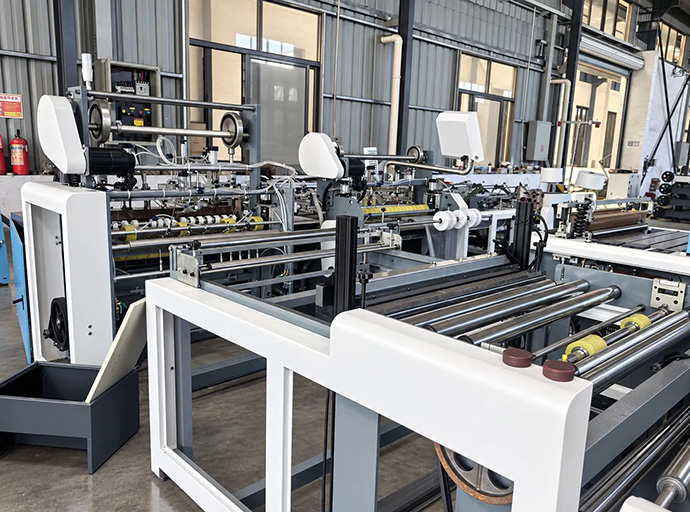
Equipment arranged inside a Kangjia workshop.
Can the supplier approve the line for production? The supplier can answer questions within the agreed tooling scope and provide documents or services stated in the order. The plant should identify who has authority for installation clearance, trial disposition, and production release under its own procedures. In a joint project, write down which party provides which evidence and who records the final decision. A supplier's note about the condition of an assembly and the plant's approval of its production process serve different purposes. Keeping both in the file helps the next reviewer see where the conclusions came from.
What should we send when requesting an extrusion tooling review? Identify the line and the component, include the applicable drawing or other approved reference, and explain what happened since the last accepted run. State the product family, the purpose of the review, and the documents or services you expect the supplier to provide. Photos can help explain an observation when they identify the assembly and show the area in question. Provide key dimensions and interface information when the request concerns fit or replacement. Send only the documents your organization has approved for that inquiry, and label any details that are still provisional.
Do we need a complete historical run file before planning the restart? An accessible history helps, but missing information can be handled explicitly. Identify which comparisons depend on the missing data and which checks can use the current product specification. The team can request a new review or agree a more limited trial if the earlier evidence is inadequate. What matters is that the report distinguishes the records available at the time of decision from the records people expected to find. This keeps a historical uncertainty from becoming an undocumented assumption in the next production record.
How should we handle a second product that uses the same die? Add the second product to the stated scope only after the responsible team reviews its requirements and determines what evidence is necessary. A shared assembly identifier does not establish that each product has the same acceptance criteria or downstream use. If some trial evidence can be used across both decisions, state exactly which part and why it applies. Where a separate check is required, identify the product and material in that check so the eventual release can be traced to the appropriate evidence.
Can pictures establish the dimensions or condition of the working surfaces? An image can show a visible arrangement and help people identify the area they are discussing. Use the applicable drawing and the agreed inspection evidence for dimensional or condition decisions. Photographs are most useful when they include a part identifier, a view description, and a link to the relevant record. Keep representative catalog views distinct from current inspection photos of the specific tooling. That simple separation prevents a familiar image from being mistaken for a record of the assembly delivered under the current order.
Kangjia lists extrusion screws and flat tape die heads for plastic flat tape equipment. If your project involves a flat tape die, provide the line model, material, required working width, mounting and interface information, and available drawings. Explain whether the inquiry concerns new tooling, a replacement project, or a review of the documents needed for a planned restart. Confirm the applicable component specification and order scope with the supplier for your actual line. A well identified inquiry and a clearly scoped trial give the plant a record it can refer to after the equipment returns to service.


جميع الحقوق محفوظة © 2022 لشركة تشجيانغ كانغجيا للآلات المحدودة
خريطة الموقعواتس اب
صندوق البريد

يستخدم هذا الموقع ملفات تعريف الارتباط لضمان حصولك على أفضل تجربة على موقعنا.

 English
 Русский
 Français
 Indonesia


 واتس اب
 هاتف
 صندوق البريد
 رسالة
تعليق
(0)